

March 19, 2012

Credits: NASA/JPL-University of Arizona - Credits for the additional process. and color.: Dr Paolo C. Fienga/Lunar Explorer Italia/IPF
|
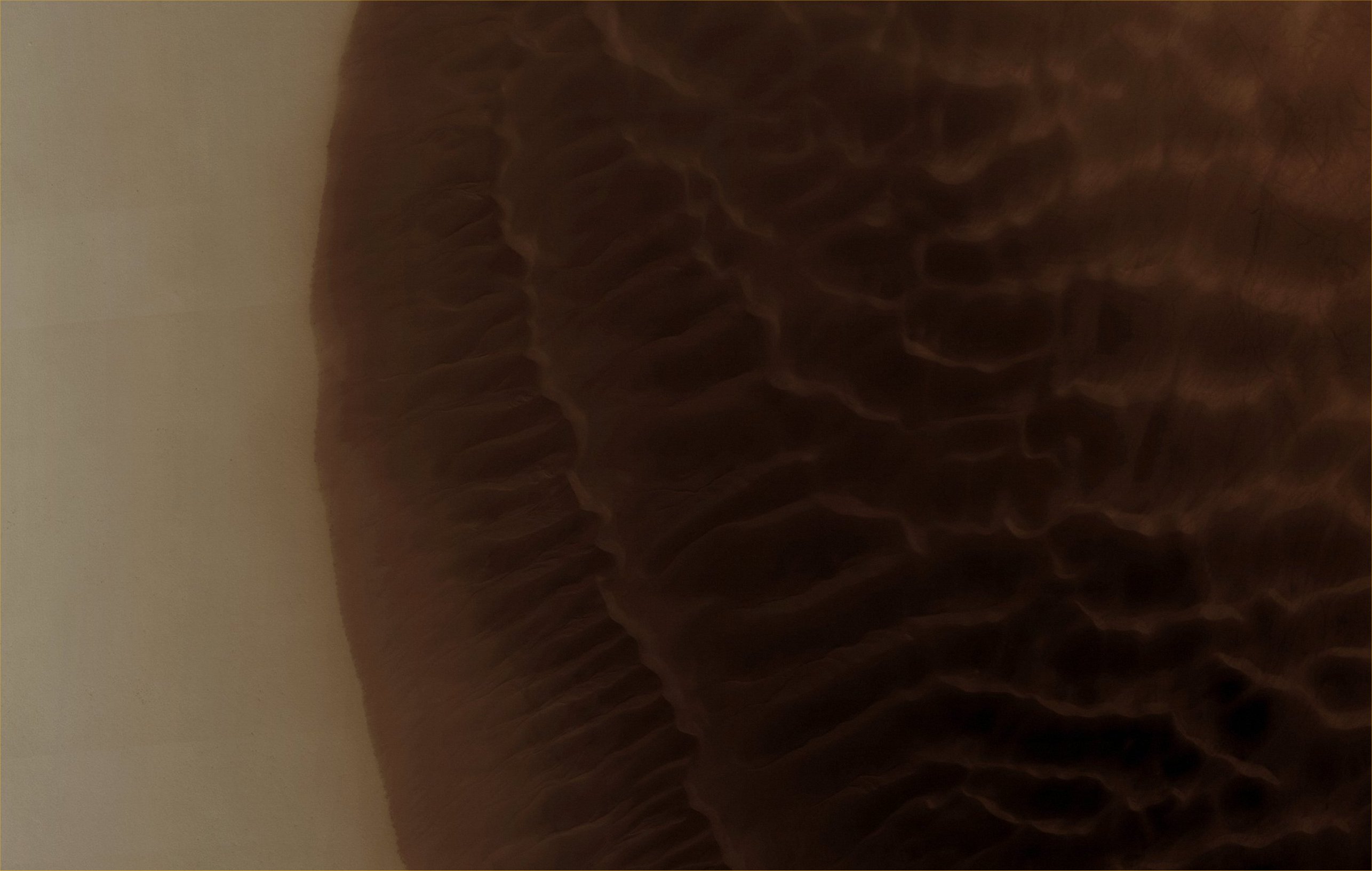
Is there still "Running Water" (maybe even just occasionally) on Mars? It seems so, and such a discovery (which occurred about three years ago) deeply increased the chances that some form of indigenous life could have actually existed on the Red Planet in a relatively recent past and/or, maybe, that it could still be surviving today. And where this discovery came from? It came from the discovery and subsequent analysis of a Surface Features which, by the way, is just the subject of today's IPF-APOD: Gullies. In middle 2009, Scientists identified Gullies and Fan-like Gullies in a variety of places on Mars, including an Unnamed Crater that appeared to be younger than 1,25 Million Years. They believed that these Gullies (which are nothing else but Channel-like Surface Features visible near and/or on the Rims and Edges of Craters as well as the Edges and Slopes of Sand Dunes) must have been sculpted (better yet: carved) by Surface Water resulting from melting ice. Anyway, there are (and there were, at the time of this discovery) already several evidences of waterborne sediments being carried down from high ground and then deposited in low-lying Alluvial Fans. Professor James Head, from Brown University in Providence, Rhode Island (USA), who reported the discovery in the journal "Geology", said: "We think there was recent water on Mars. And the discovery of such an abundance of Surface Features like Gullies and Alluvial Fans is a big step in the direction to proving that". As a matter of fact, right in those days, an entire Gully System had been found in Promethei Terra, an area of highly Cratered Highlands located South of the Martian Equator. The powerful camera positioned on the NASA - Mars Reconnaissance Orbiter Spacecraft was able to distinguish 4 (four) individual Lobes of Deposited Material in the Fan System, all of them characterized by the presence of Gullies. One of these Lobes was (and obviously still is) pockmarked with small craters and linked to a Rayed Unnamed Crater located about 80 Km away and known to be less than 1,25 Million Years Old. While this Lobe, therefore, is likely to be about the same age of the aforementioned Rayed Unnamed Crater, the other 3 (three) Lobes, instead, were (and of course they still are) unblemished, and this could only mean that they had to be much younger than the cratered one. Many Scientists believed and still believe that the best explanation for the existence of Gullies on Mars is melting snow and ice rather than groundwater bubbling up to the Surface (even though this second possiblity cannot be excluded so far). These findings followed the discovery of Water-bearing Minerals such as Opals and Carbonates on Mars. Experts now think the Red Planet was (and, most likely, still is) occasionally wet and, in a (relatively) recent past, it must have been wetter and for a far longer time than it was ever previously believed. However, and as far as today's image is concerned, the presence of Gullies on the Edges and Slopes of Sand Dunes, if we assume that it is a water-related phenomenon, then it can only be attributed, like we said before, to the melting of snow and ice, which deposited on the Dunes themselves during the Martian Winter. Mars Local Time: 14:45 (Early Afternoon) This frame has been colorized in Absolute Natural Colors by (such as the colors that a human eye would actually perceive if someone were onboard the NASA - Mars Reconnaissance Orbiter and then looked down, towards the Surface of the Mars), by using an original technique created - and, in time, dramatically improved - by the Lunar Explorer Italia Team.
|
News visualized: 780 times