

March 7, 2012

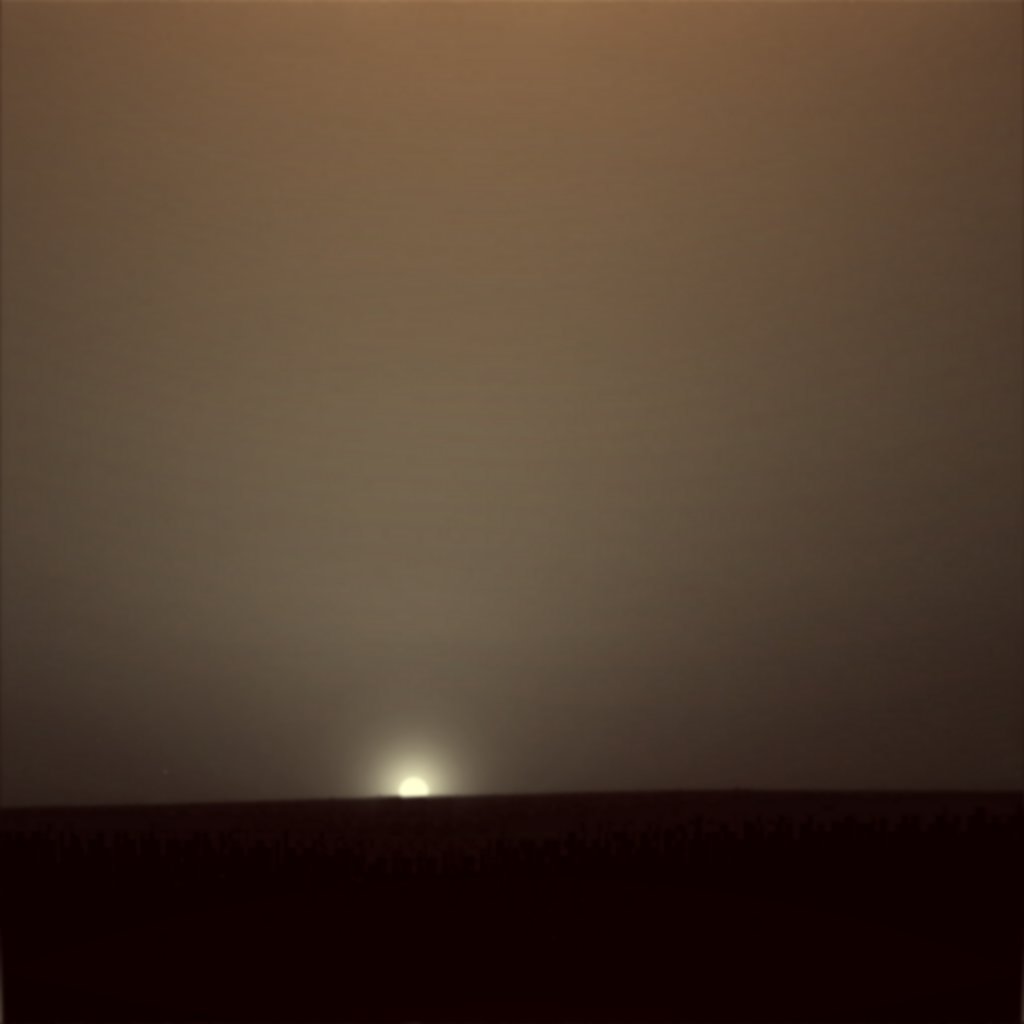
Credits: NASA/JPL-Caltech - Phoenix Lander Mission - Credits for the additional process. and color.: Dr Paolo C. Fienga/Lunar Explorer Italia/IPF
|
From the location of NASA's - Phoenix Mars Lander, above the Martian Arctic Circle, the Sun does not set during the peak of the Martian Summer. But this is not the case: when this picture was taken, the period of maximum available Solar Energy which was necessary to sustain the Phoenix Mars Lander had already come and gone — to be precise, that peak occurred on Sol 86, such as the 86th Martian Day after the Phoenix landing. Now, on Sol 90 of the Mission, the Sun fully set behind a slight rise to the North that lasted for about half an hour. This image, taken by the Lander's Surface Stereo Imager, shows the Sun rising on the morning of Sol 90 (such as August, 25, 2008), the last day of the Phoenix "Nominal (or "Prime") Mission". The image was taken at 51 minutes past Midnight (Mars Local Solar Time) during the slow Sunrise that followed a 75-minutes long "night". The skylight visible in the image is light scattered off Atmospheric Dust Particles and Ice Crystals. The setting Sun did not mean, however, the end of the Mission: in late July 2008, the Phoenix Mission was extended through September, and things went well for about other three months. Afterwards though, on November 10th, 2008, NASA's - Phoenix Mars Lander became silent (this meaning that the Lander ceased communications after operating for more than 5 months). As anticipated, the seasonal decline in Sunshine at the Lander's Arctic Landing Site was fatal to Phoenix: in fact, the Lander's Solar Arrays became rapidly unable to collect an amount of Solar Energy that could be enough to produce the power necessary to keep charging the batteries which operated all its instruments. Mission engineers last received a signal from the Phoenix Lander on November 2, 2008. Phoenix, in addition to shorter daylight, had encountered a dustier sky, more clouds and much colder temperatures as the Northern Mars Summer approached Autumn. Even though the Project Team kept listening carefully during the next few weeks to hear if Phoenix had somehow "revived" and sent signals "home", no signal was ever received (most likely because of the rapid worsening of the weather conditions existing over that Region of Mars). This meant (and still means, however) that while the Spacecraft's work is definitly over, the analysis of the Science Data which have been received from it, is just beginning... This frame has been colorized in Absolute Natural Colors (such as the colors that a human eye would actually perceive if someone were near the Phoenix Mars Lander and then looked towards the Horizon and the Sky above), by using an original technique created - and, in time, dramatically improved - by the Lunar Explorer Italia Team. |
News visualized: 864 times