

February 16, 2012

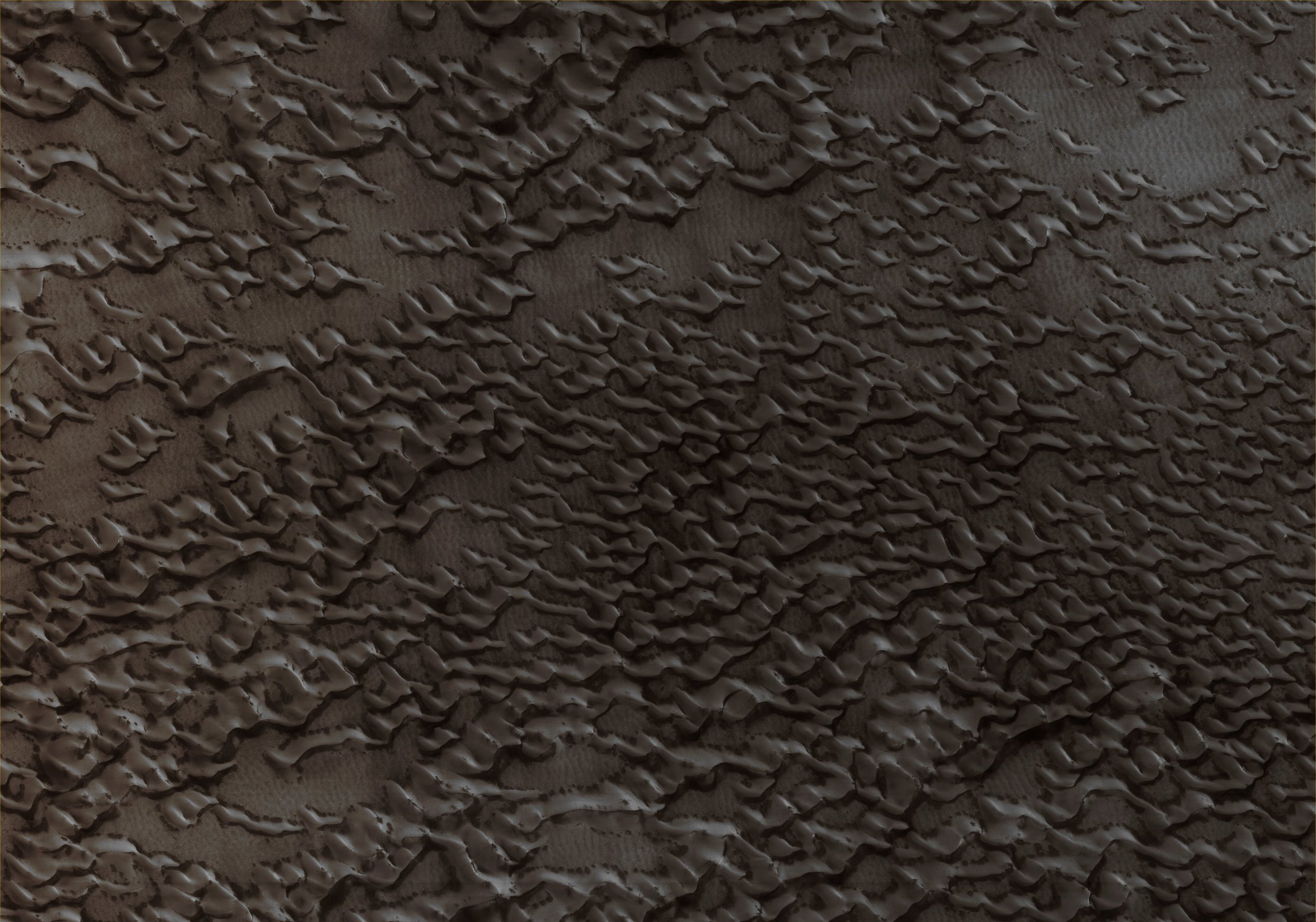
Credits: NASA/JPL/University of Arizona - Credits for the additional process. and color.: Dr Paolo C. Fienga/Lunar Explorer Italia/IPF
|
Olympia Undae is a vast Dunefield located in the North Polar Region of Mars. It consists of a broad “sand sea” - or Erg - that partially rings the North Polar Plateau (also known as Planum Boreum) from about 120° to 240° East Longitude and 78° to 83° North Latitude. Stretching about 1100 km (or approx. 680 mi) across and covering an area of 470.000 square/km, Olympia Undae is the largest continuous Dunefield known on Mars. It is similar in size to the Rub' Al Khali Region in the Arabian Peninsula:the largest active Erg exisiting on our Home Planet Earth (as a curiosity, even a small zone of the Martian Desert of Meridiani Planum as recently been named, although only informally - by the MER Opportunity Science Team, to be precise -, as Rub' Al Khali). Olympia Undae lies within the informally named Borealis Basin (also known as North Polar Basin), which is the largest of three topographic Basins that exist in the Northern Lowlands of Mars. The average elevation in Olympia Undae is about 4250 mt below the Datum (such as "0" Altitude, or also "Martian Sea Level"). The 19-km-diameter Impact Crater Jojutla lies near the geographic center of Olympia Undae at about 81,63° North Latitude and 169,65° East Longitude. The really peculiar white/blueish reflection that can be observed almost everywhere and especially on the top of the Dunes shown in this frame, is likely translucent water-ice, shining in the Sun of the Martian Early Afternoon. Mars Local Time: 13:49 (Early Afternoon) Coord. (centered): 75,0° North Lat. and 300,0° East Long. Spacecraft altitude: 318,7 Km (such as about 199,2 miles) Original image scale range: 31,9 cm/pixel (with 1 x 1 binning) so objects ~ 96 cm across are resolved Map projected scale: 25 cm/pixel Map projection: POLAR STEREOGRAPHIC Emission Angle: 1,4° Phase Angle: 69,2° Solar Incidence Angle: 70° (meaning that the Sun is about 20° above the Local Horizon) Solar Longitude: 16,2° (Northern Spring) Credits: NASA/JPL/University of Arizona This frame has been colorized in Absolute Natural Colors by (such as the colors that a human eye would actually perceive if someone were onboard the Mars Reconnaissance Orbiter and then looked down, towards the Surface of Mars), by using an original technique created - and, in time, dramatically improved - by the Lunar Explorer Italia Team.
|
News visualized: 847 times