

February 25, 2013

Credits: NASA/JPL/University of Arizona - Credits for the additional process. and color.: Drr Gianluigi Barca and Paolo C. Fienga/Lunar Explorer Italia/IPF
|
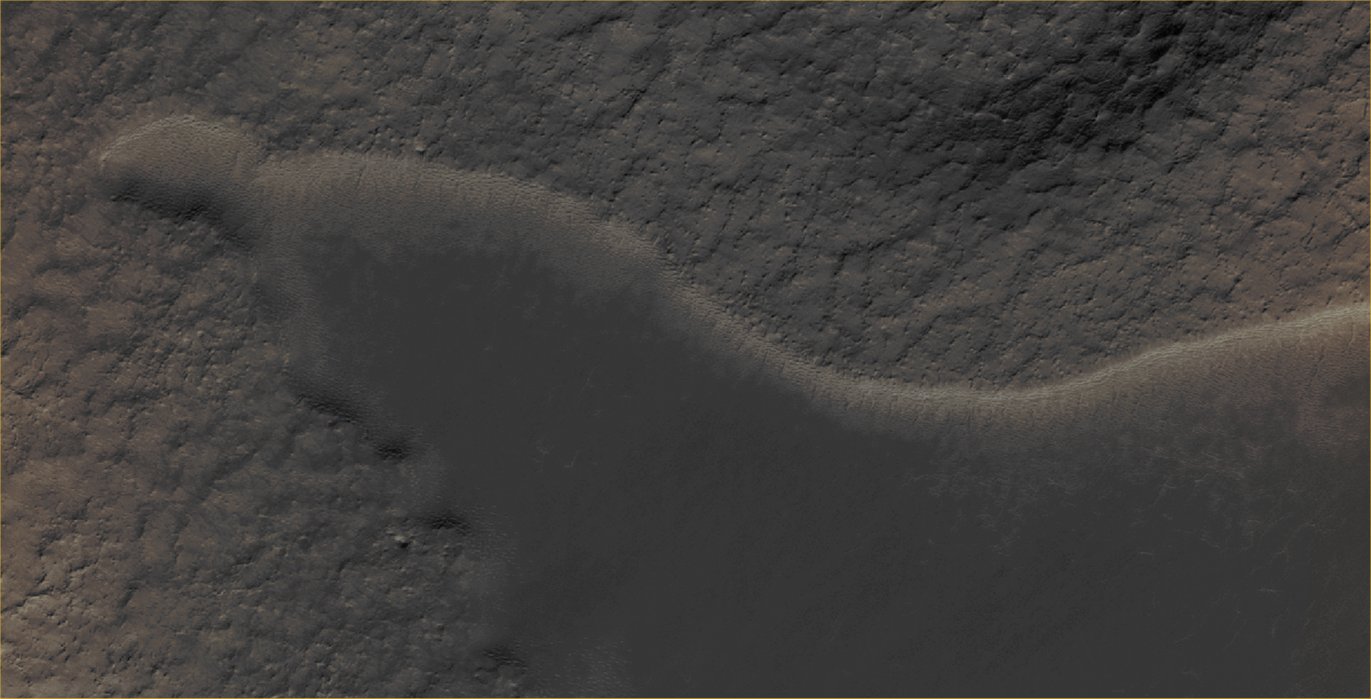
Today's APOD is an EDM (Extra Detail Magnification) showing us the Northernmost portion of the possible South Polar Paleo-Lake that we have identified. Only one (and really small) Impact Crater can be seen near the lower left (Sx) Margin of the Feature; furthermore, the total absence of Craters on the "Smooth Surface" itself, can be cosidered as a clear indication that the Material (which we believe, as IPF, is, most likely, Dust-covered Water Ice) forming it, is - relatively - fresh (exactly like most of the Terrain that lies all around the Feature). Mars Local Time: 14:56 (Early Afternoon) This picture (which is a cropped and NON-Map Projected NASA - Original Mars Reconnaissance Orbiter JP2-CTX b/w frame, identified by the serial n. ESP_023024_1010) has been additionally processed and then colorized in Absolute Natural Colors (such as the colors that a human eye would actually perceive if someone were onboard the NASA - Mars Reconnaissance Orbiter and then looked down, towards the Surface of Mars), by using an original technique created - and, in time, dramatically improved - by the Lunar Explorer Italia Team. |
News visualized: 810 times