

December 13, 2012

Credits: NASA/JPL/University of Arizona - Credits for the additional process. and color.: Dr Paolo C. Fienga/Lunar Explorer Italia/IPF
|
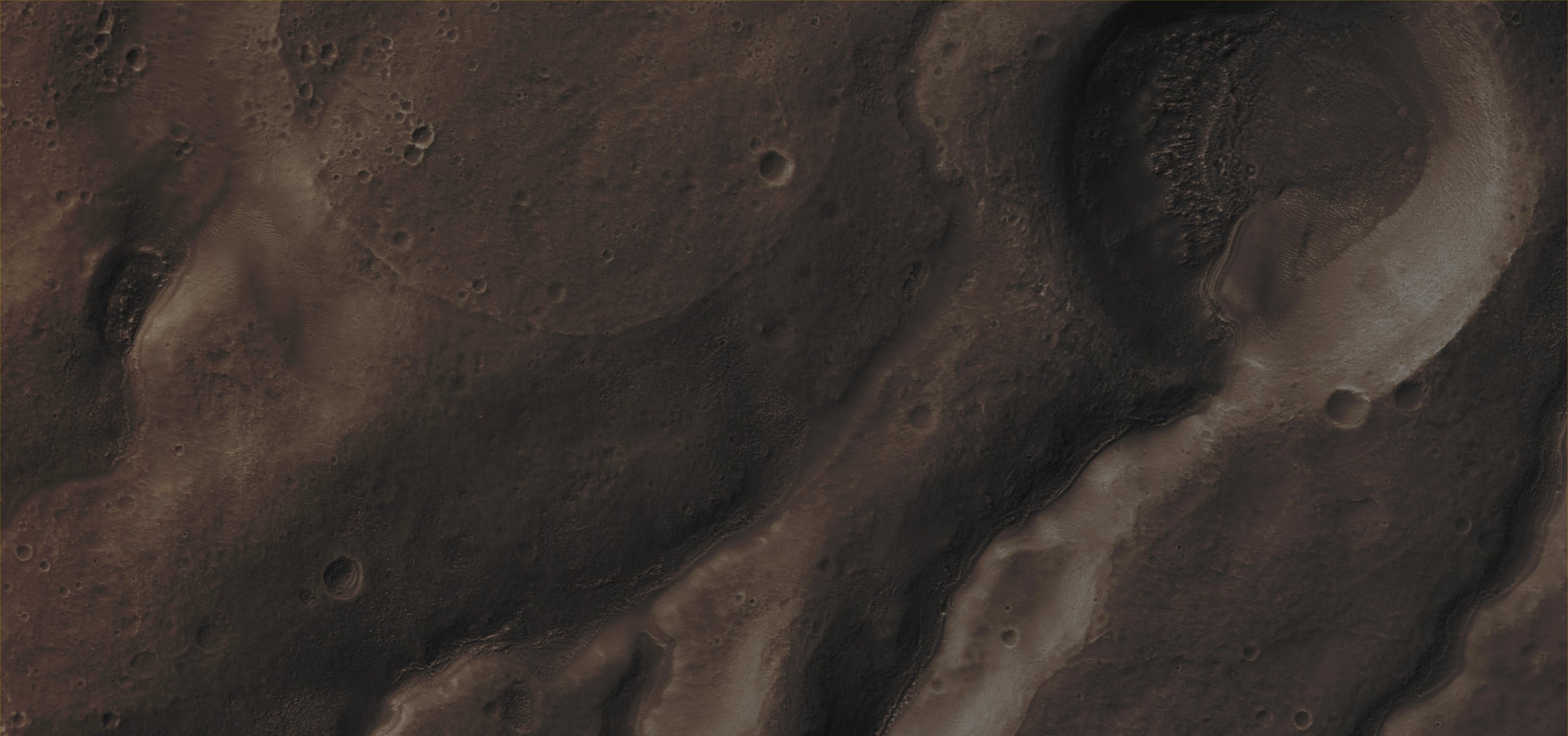
Icaria Planum is a Southern Region of Mars, located in the "Thaumasia Quadrangle"; this Region is approx. 566 Km across and it is centered at 43,27° South Latitude and 253,96° East Longitude. Icaria Planum was so named, in the AD 1979, after a so-called "Classic Albedo Feature" (such as a large, but not well (---> meaning in more than excellent detail) defined, Area located on the Surface of a Celestial Body, which is well visible through Earth-located telescopes and that shows a clear, peculiar and constant contrast, either in brighness or in darkness, with respect to the Reflectivity (---> Albedo) of the other Areas which are adjacent to it). The name of the Classic Albedo Feature (now known as Icaria Planum), as you should already know (but it is a good thing to remember it, anyway), was based on the land where Icarus lived (such as the Greek Island of Crete). Mars Local Time: 14:49 (Early Afternoon) This picture (which is a NASA - Original Mars Reconnaissance Orbiter CTX b/w frame, identified by the serial n. ESP_024955_1390) has been additionally processed and then colorized in Absolute Natural Colors (such as the colors that a human eye would actually perceive if someone were onboard the NASA - Mars Reconnaissance Orbiter and then looked down, towards the Surface of Mars), by using an original technique created - and, in time, dramatically improved - by the Lunar Explorer Italia Team. |
News visualized: 846 times