

October 2, 2012

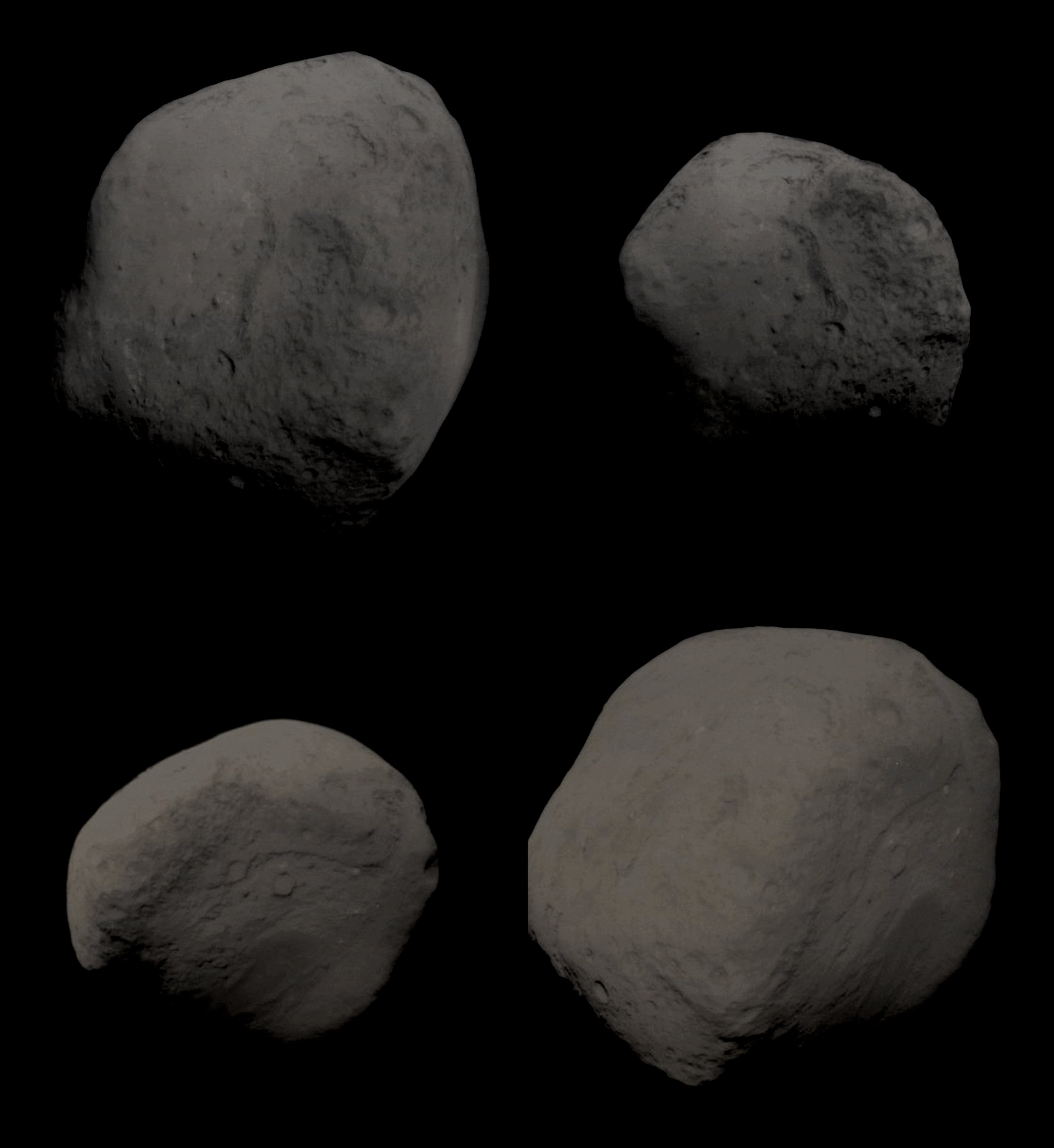
Credits: NASA/JPL-Caltech - Stardust Project - Cornell University; Credits fo the additional process. and color.: Dr Paolo C. Fienga/LXTT/IPF
|
Today's APOD is an image mosaic that shows us 4 different views of the Comet Tempel-1, as it was seen by the NASA - Stardust-NeXt Spacecraft when it flew by it, on February 14, 2011. The images progress in time beginning at upper left, moving to upper right, then proceeding from lower left to lower right. When the Spacecraft first approached the Comet, it got a clear look at the same Surface that was imaged previously by another Spacecraft: the NASA - Deep Impact Spacecraft, in 2005. Remember that the Deep Impact Spacecraft sent a projectile into the Comet, creating a crater that is located in the upper left image (but is difficult to see at this particular contrast level). Both the upper right and lower left images are the Closest Approach Images for Stardust, taken at 3" before, and 3" after it. These images were taken from a distance of about 185 Km (approx. 115 miles) from the Comet. In the lower left image, the vast majority of Terrain that is pictured had not been seen until now. The fourth image, at lower right, shows Stardust's view as the Spacecraft was on the way out. The frames forming this image-mosaic (which is the Original NASA - Stardust-NeXT Spacecraft image mosaic published on the NASA - Planetary Photojournal with the ID n. PIA 13860) has been additionally processed and then colorized, according to an informed speculation carried out by Dr Paolo C. Fienga (LXTT-IPF), in Absolute Natural Colors (such as the colors that a human eye would actually perceive if someone were onboard the NASA - Stardust-NeXT Spacecraft and then looked outside, towards the Comet Tempel-1), by using an original technique created - and, in time, dramatically improved - by the Lunar Explorer Italia Team. Different colors, as well as different shades of the same color, mean, among others, the existence of different Elements present on the Surface of Tempel-1, each having a different Albedo (---> Reflectivity) and Chemical Composition. |
News visualized: 844 times