


September 29, 2012

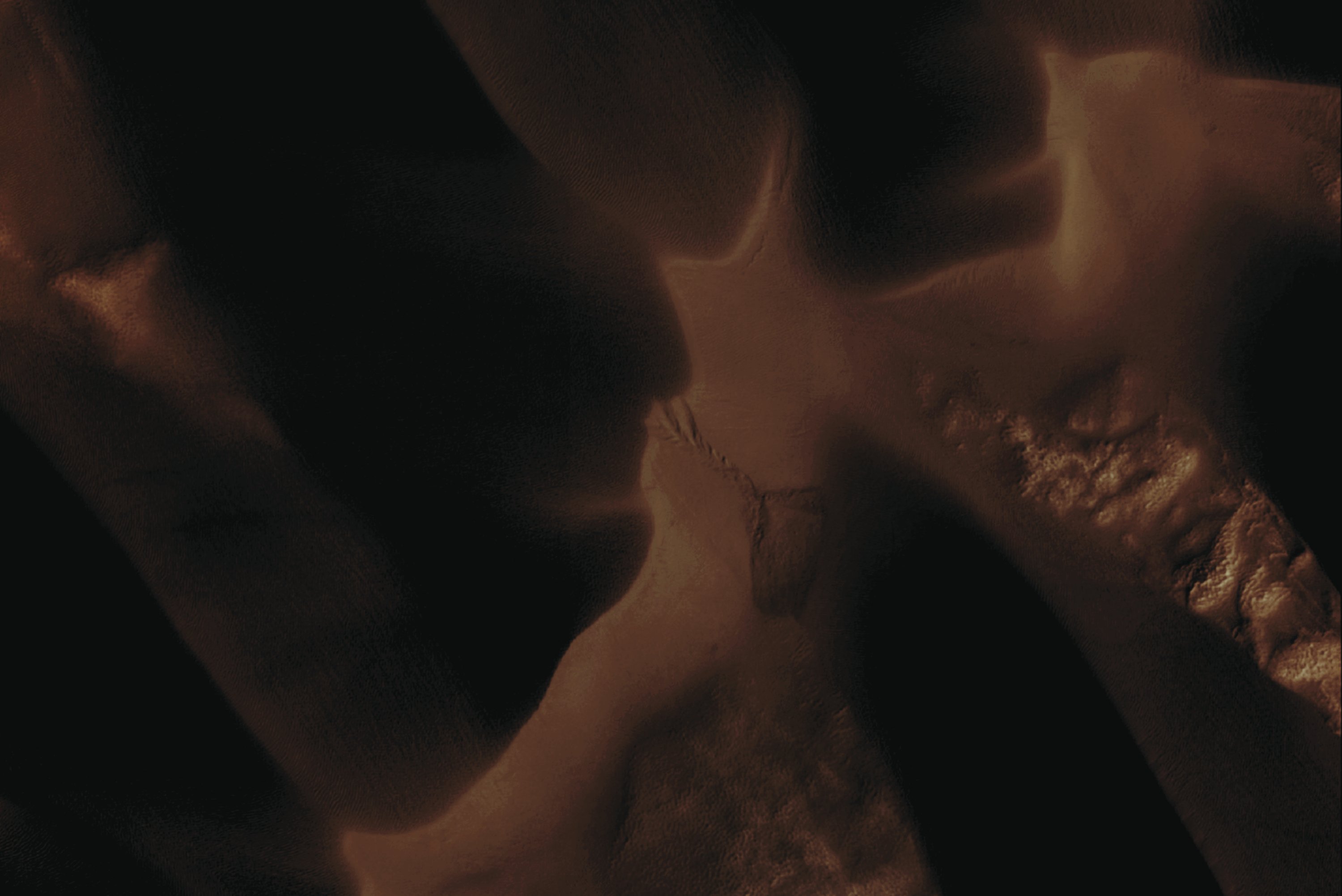
Credits: NASA/JPL/University of Arizona - Credits for the additional process. and color.: Dr Paolo C. Fienga/Lunar Explorer Italia/IPF
|
Sand Dunes, as you know, are one of the most common Martian Surface Features and can be found almost everywhere on the Red Planet; the Dunes (with some Rocky Outcrops visible in between them) which are shown here, however, are located in the North Polar Regions. Whereas that High Latitude Dunes are seasonally covered with Carbon Dioxide (CO2 or Dry Ice) Frost, in this frame we can see that no CO2 Frost is visible, but some Sandy Material has slipped from the Crest of a Dune and then it slid down to form a Deposit at its bottom. The Material, in the light of what have we said herebefore, slid down because, in our opinion, it was loosened (---> made less compact) by the physical modifications of the Dune which were associated with the Sublimation (---> such as the passage of an Element from a solid state, to a gaseus state) of the Seasonal Frost. Mars Local Time: 14:43 (early afternoon) This picture (which is a NASA - Original Mars Reconnaissance Orbiter EDM color frame identified by the serial n. PSP_010546_2615) has been additionally processed and then re-colorized in Absolute Natural Colors (such as the colors that a human eye would actually perceive if someone were onboard the NASA - Mars Reconnaissance Orbiter and then looked down, towards the Surface of Mars), by using an original technique created - and, in time, dramatically improved - by the Lunar Explorer Italia Team.
|
News visualized: 813 times