


July 1, 2012

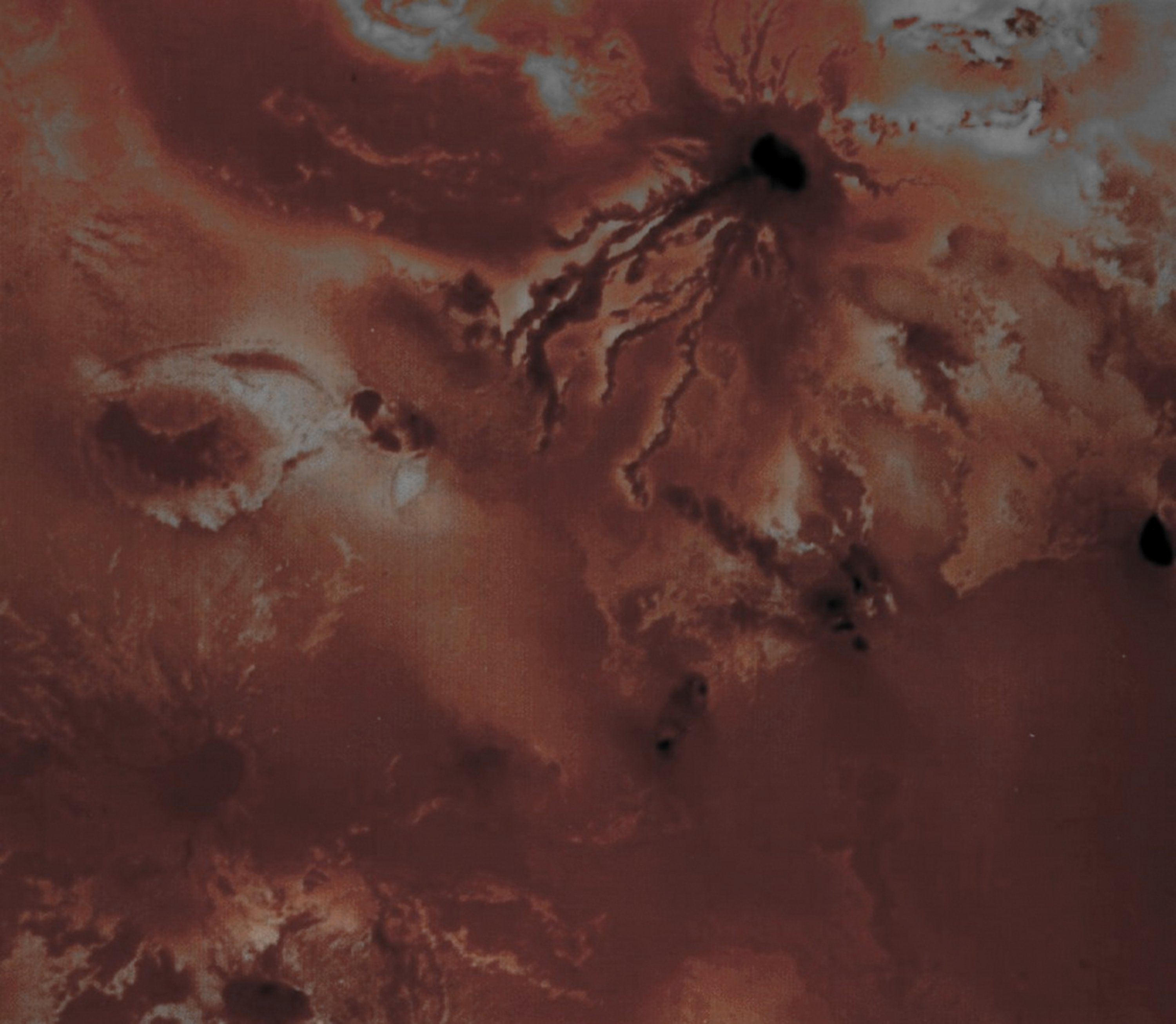
Credits: NASA/JPL/Voyager 1 Spacecraft - Credits for the additional process. and color.: Dr Paolo C. Fienga/Lunar Explorer Italia/IPF
|
When the twin NASA - Voyager 1 and Voyager 2 Probes passed by Io in the early AD 1979, their (for that time) advanced imaging system allowed Scientists to get beautiful and very well detailed images. The Voyager 1 Probe flew over this extremely fascinating and geologically hyperactive Jovian Natural Satellite on March 5, 1979, from a distance of approx. 20.600 km (such as about 12.800 miles). The images returned during this approach revealed a strange, multi-colored landscape devoid of Impact Craters. The highest-resolution images showed also a (relatively speaking) young Surface, punctuated by oddly shaped Collapse Pits, huge Mountains (even taller than the Mount Everest on Earth), and other Surface Features resembling Volcanic Lava Flows. Shortly after the encounter, the NASA - Voyager 1 Navigation Engineer Linda A. Morabito noticed, while analyzing the images taken by the probe, something that looked like a Volcanic Plume, emanating from the Surface of Io. Based on that discovery, the further (and deeper) analysis of other NASA - Voyager 1 images showed 9 (nine!) other Plumes scattered across the Surface of this moon, so proving beyond any doubt that Io was (VERY!) volcanically active. As a matter oif fact, this conclusion had been predicted in a paper published some time before the NASA - Voyager 1 encounter with Io, by Drr Stan J. Peale, Patrick Cassen, and R. T. Reynolds. The authors of this paper calculated that Io's interior must always experience a more than significant Tidal Heating, caused not only by its high proximity with Jupiter, but also by the fact that Io moves around its Parent Planet in a state of Orbital Resonance with other two Jovian moons: Europa and Ganymede. Data obtained from the NASA - Voyager 1 Fly-By showed that the Surface of Io is dominated by Sulphur and Sulphur Dioxide Frosts and these compounds also dominate its thin Atmosphere as well as the Torus of Plasma that is centered on Io's orbit (and which was also discovered by the NASA - Voyager 1 Probe). When the NASA - Voyager 2 passed Io on July 9, 1979 at a distance of about 1.130.000 Km (such as approx. 702.000 miles), even though it did not approach that Celestial Body nearly as close as the Voyager 1, comparisons between the images taken by the two Spacecrafts showed several meaningful Surface Changes that had occurred in the only 4 (four) months which had passed in between the two space encounters. In addition, further observations of Io while in its Crescent Phase (observations made when the Voyager 2 Probe departed the Jovian System), revealed that 8 (eight) of the 9 (nine) Volcanic Plumes observed in March were still active in July (this meaning that only the Pele Volcano had shut down between the two Fly-Bys). Just out of curiosity, this specific frame (such as the one we proposed you in today's APOD) was used in the making of the second (and, so far, the last) Science-Fiction movie inspired by the Arthur C. Clarke's Space Saga of "2001 - A Space Odyssey". This picture has been colorized in Absolute Natural Colors (such as the colors that a human eye would actually perceive if someone were onboard the NASA - Voyager 1 Probe and then looked outside, towards the Surface of the Jovian moon Io), by using an original technique created - and, in time, dramatically improved - by the Lunar Explorer Italia Team. |
News visualized: 786 times