
April 2, 2012

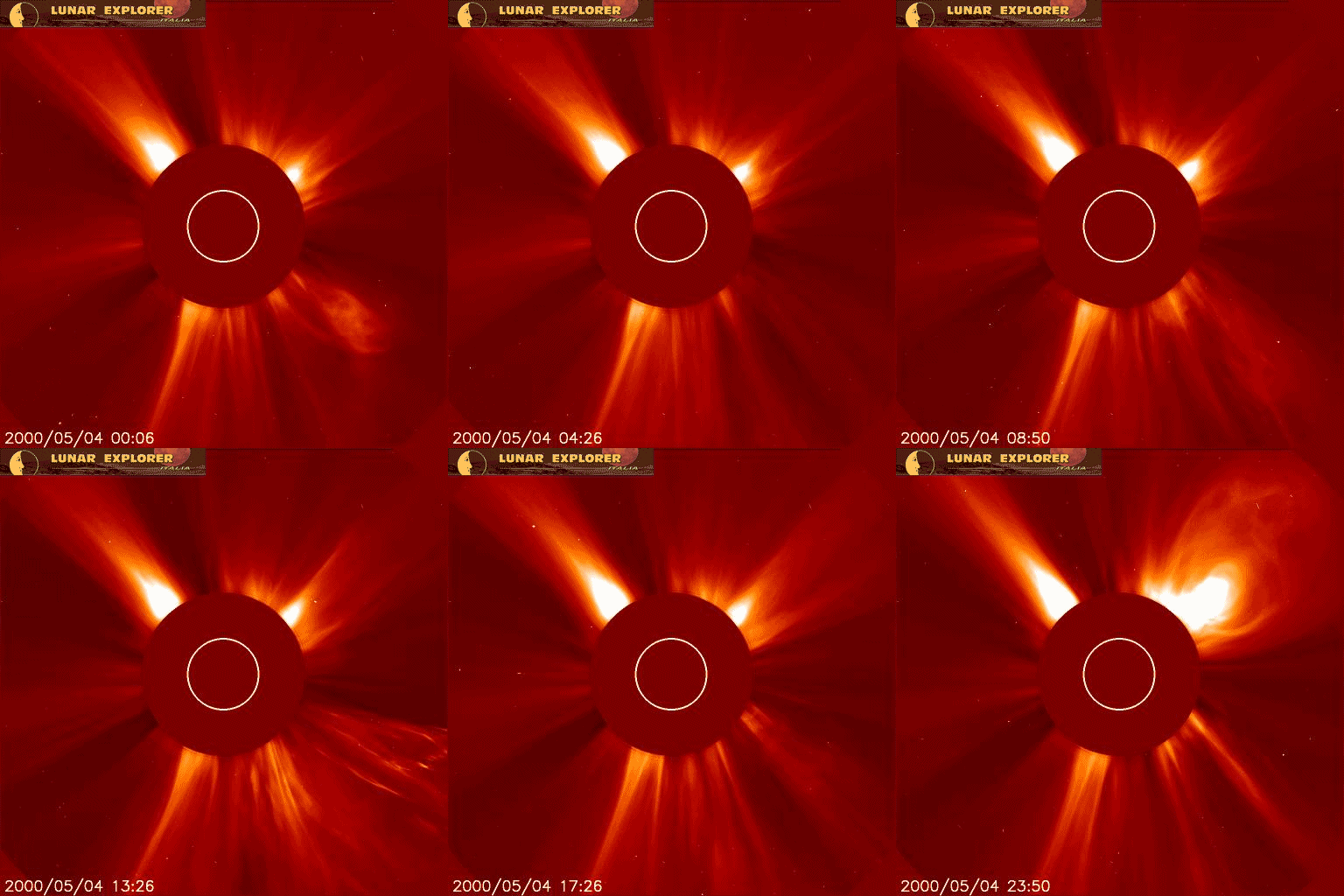
Credits: Soho - EIT Consortium/ESA/NASA; credits for the additional process.: Dr Gianluigi Barca/LXTT/IPF
|
Is our Sun a "quiet" Star? Well, a question like that is certainly tricky and misleading, actually. As a matter of fact, it would actually be much better to ask ourselves, instead, if, somewhere in the Universe (and, of course, always speaking in relative and general terms), it is really possible to find a "Quiet Star". The truth? The truth is that Stars are not quiet at all and, even when they seem to be "acting" peacefully, huge events keep occurring inside them all the time. Among others, one of the most fascinating event that often happens onto our Sun (as well as to any other Star), is known as Coronal Mass Ejection (or CME for short). What is it? A Coronal Mass Ejection is a massive burst of light Isotope Plasma (which is actually part of the matter that forms the Sun), with gigantic Magnetic Fields rising above the Solar Corona and/or being released into Space. CMEs are often associated with other forms of Solar Activity, like the Solar Flares (or the Eruptive Prominence and X-Ray Sigmoids; Coronal Dimming - such as long-term brightness decrease of the Solar Surface -; EIT and Moreton Waves; Coronal Waves - meaning bright fronts propagating from the location of the eruption - and Post-Eruptive Arcades), but a causal relationship between all of these phenomena and the CMEs has not been established yet. Anyway, we do know that most Coronal Mass Ejections originate from Active Regions of the Sun's Surface, such as groupings of Sunspots, associated with (frequent) Flares. Near the periods of the so-called "Solar Maxima", the Sun produces about three CMEs every day, whereas near the Solar Minima, there is about one CME approximately every five days. Furthermore, and as we already said before, Coronal Mass Ejections release huge quantities of Matter and Electromagnetic Radiations into the Space above the Sun's Surface, either near the Corona (sometimes these CMEs are called Solar Prominences) or farther into the Solar System or even beyond it (and these CMEs are called "Interplanetary CMEs"). The ejected material is a sort of Plasma consisting primarily of Electrons and Protons, but it may also contain small quantities of heavier Elements such as Helium, Oxygen, and even Iron. It is also important to remember that all the CME's are associated with enormous changes and disturbances in the Coronal Magnetic Field. In this beautiful GIF-Movie, among other things, you will be able to see at least two CMEs as well as a clear, and VERY well defined, Cosmic Ray. So...Enjoy this Day of the Sun! |
News visualized: 793 times