

March 23, 2012

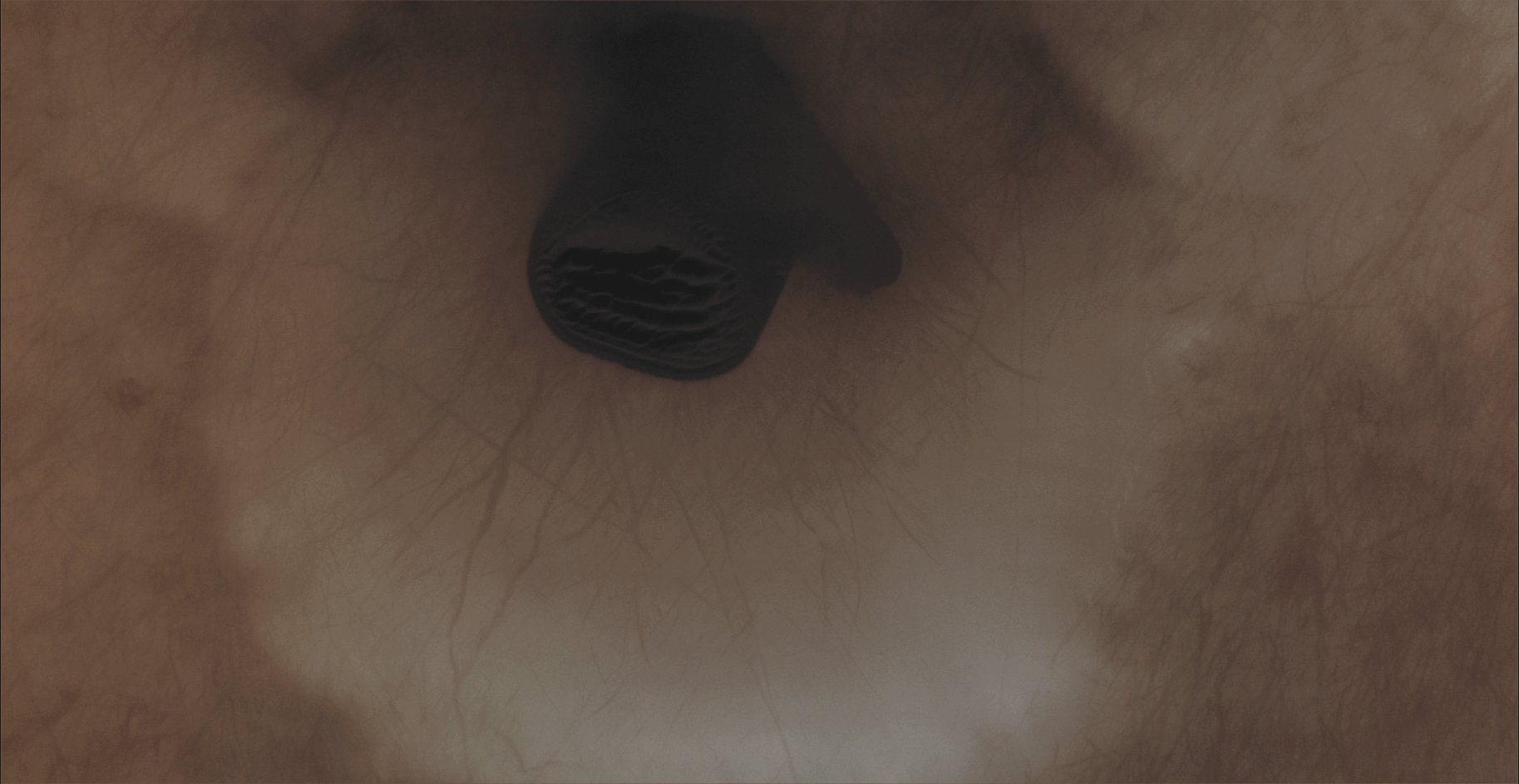
Credits: NASA/JPL/Arizona State University (ASU) - Credits for the additional process. and color.: Dr Paolo C. Fienga/Lunar Explorer Italia/IPF
|
Are the Martian Dunes identical to the Dunes of our Home Planet Earth? Well, let's just say that the eternal Martian Wind blows the heavy Sand into Dunes, just as it happens on Earth, and then you can see the Hummocks and Ripples all over them (like in today's APOD image). Consider, however, that the Sand on Mars is mostly deriving from Basalt, which is a darkish gray color. The red/orange color, instead, comes from much smaller Dust Particles which, after they fall onto the Surface, settle everywhere (Rocks, Boulders, Hills, Plains and, of course, isolated Dunes and Dunefields). Said that, why do the small Dunefield well visible on the bottom of this small Unnamed Mars' Southern Hemisphere Crater is so dark (almost black) and its appearence is so unsual (it seems like a small lake of Mud)? Perhaps because this small Dunefield here, is really made of something that, from a certain distance, looks like Mud, even though it is not Mud at all! What that could be then? Once again, we must say that no one knows for sure, but several Researchers and a few Mars' Scientists speculated that at the bottom of many Martian Craters and Collapse Pits, there could be Surfacing Hydrocarbons, just like we know that it happens on the Saturnian moon Hyperion. Could this picture be a proof of such an idea? Too early to say. But one thing we know for sure: if, in a very distant time, there really was some abundance of Indigenous Life on Mars (Martian Life that was similar to the Earth's one - such as Carbon-based Lifeforms), then the hypothesis that we could have Hydrocarbons on Mars and that some of it could have actually surfaced (in time and for a number of reasons), then this image could make our case, and become historic. Is this Fantasy? Reality? Or just an Exotic Possibility? Only Time will tell. Image information: VIS instrument; Latitude: 68,1° South; Longitude: 175,6° East; Resolution: 17 meters/pixel. This frame has been colorized in Absolute Natural Colors (such as the colors that a human eye would actually perceive if someone were onboard the NASA - Mars Odyssey Orbiter and then looked down towards the Surface of Mars), by using an original technique created - and, in time, dramatically improved - by the Lunar Explorer Italia Team. |
News visualized: 1008 times